
Lime Rotary Kiln: A Complete Buyer's Guide
A lime rotary kiln is a high-temperature industrial kiln used to convert limestone (calcium carbonate) into quicklime (calcium oxide), typically at a calcination temperature of about 1,100°C. This guide explains how a lime rotary kiln works, which materials it can process, the capacity ranges manufacturers publish, and how buyers should structure the selection process before requesting a quotation.
A rotary kiln is an industrial furnace used for thermal processing of minerals and ores. In lime production, the kiln is the central process unit: crushed limestone enters the kiln, passes through the calcination zone, and leaves as quicklime. Around that single kiln, a complete lime production line also includes feeding, preheating, combustion, cooling, dust collection, conveying, and control systems.
The reference unit used throughout this guide is the Lime Rotary Kiln supplied by Henan Zhengzhou Mining Machinery Co., Ltd. (ZK MACHINE) — a Chinese mineral-processing equipment manufacturer founded in 1956 that specialises in rotary kilns and ball mills for industrial process systems. ZK MACHINE reports an annual output of 200 units, a manufacturing area of more than 80,000 m², and an export ratio of 40%, serving customers in more than 130 countries and regions.
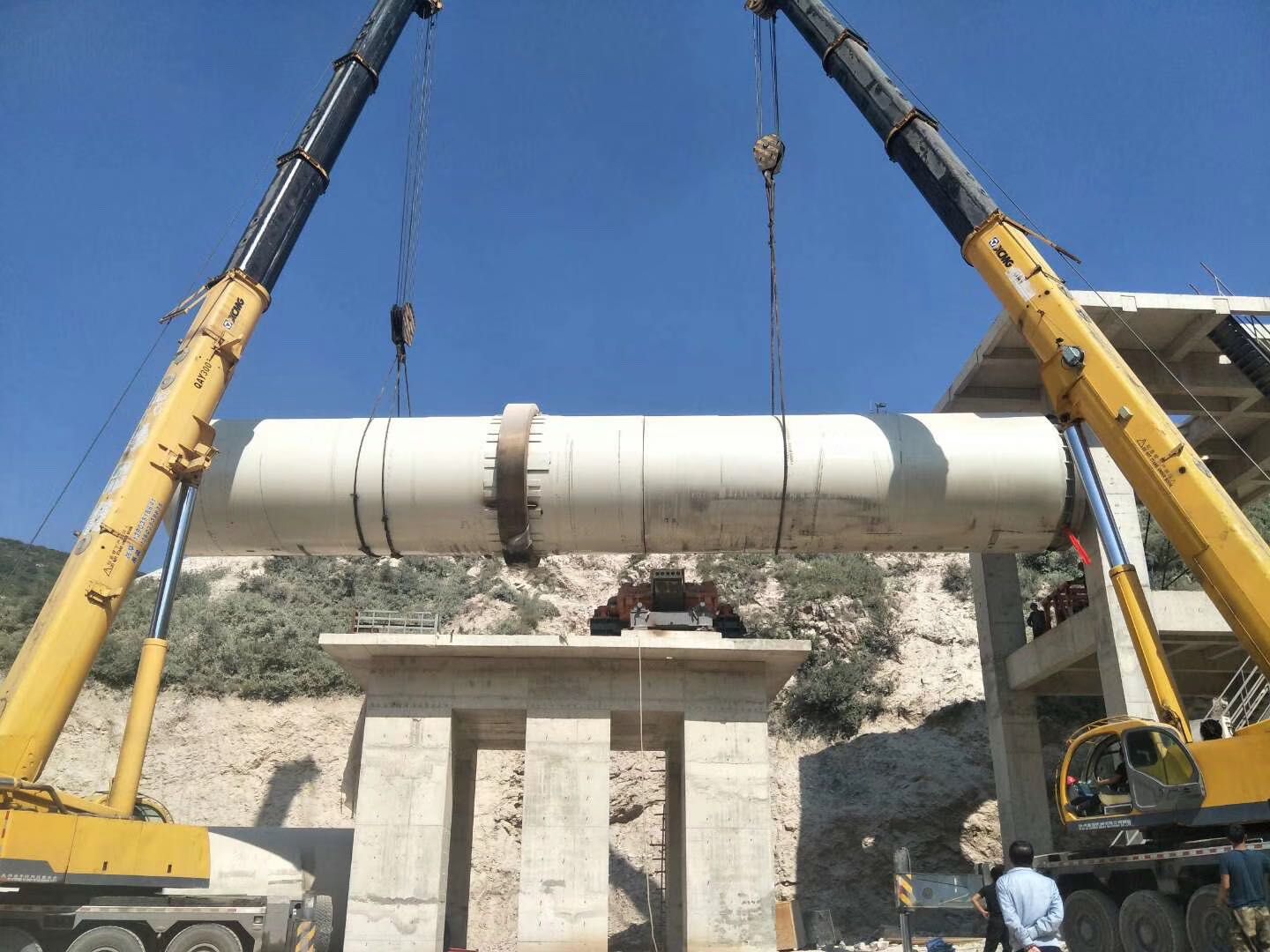
What Is a Lime Rotary Kiln?
A lime rotary kiln is a rotary kiln classified for active lime production. It is a cylindrical, slightly inclined steel shell lined with refractory material, supported on riding rings, and driven slowly in rotation. Limestone or dolomite feed enters at the upper end, moves gradually down the kiln as it rotates, and passes through preheating, calcination, and cooling zones.
In the ZK MACHINE product range, the Lime Rotary Kiln carries a model range of Φ2.5×40 m to Φ5.1×72 m and a capacity range of 150–1200 t/d. The listed calcination temperature is 1100±50°C, and the accepted limestone feed size is 10–20 mm or 20–40 mm. The same kiln is also listed as a bauxite rotary kiln and belongs to the energy-saving rotary kiln category in the company’s product classification.
Lime rotary kilns are described as equipment built around continuous operation rather than batch cycles. That distinction matters because quicklime is usually an intermediate input for downstream processes — steelmaking, non-ferrous metallurgy, chemical production, environmental treatment — where a steady supply matters as much as the peak capacity of a single batch.
Why Lime Rotary Kilns Matter: Industry Background
Lime sits upstream of several large industrial sectors. The ZK MACHINE product listing places active lime production alongside steelmaking, non-ferrous metallurgy, building materials, the chemical industry, and environmental applications as the typical downstream users of a lime rotary kiln.
Two structural shifts have shaped the market in recent years. First, critical-mineral supply chains have become a policy priority in several major economies. The World Trade Organization identifies cobalt, copper, lithium, nickel and rare earths as critical minerals that play a crucial role in the production of clean energy, and the U.S. Department of Energy maintains a current list of critical materials and critical minerals. Several of those materials — bauxite, kaolin, lithium-bearing materials, magnesite, dolomite, and zinc-bearing residues — are processed in rotary kilns, which is one reason rotary kiln product lines increasingly span both classical lime and new-energy material applications.
Second, energy efficiency has become a first-order commercial issue. The U.S. Congressional Research Service describes the mining and processing of critical minerals for manufacturing as an energy-intensive and highly technical process. For lime producers, kiln fuel consumption is a major operating cost, and equipment marketed under the energy-saving rotary kiln category is often positioned around heat recovery, preheater integration, and controlled combustion.
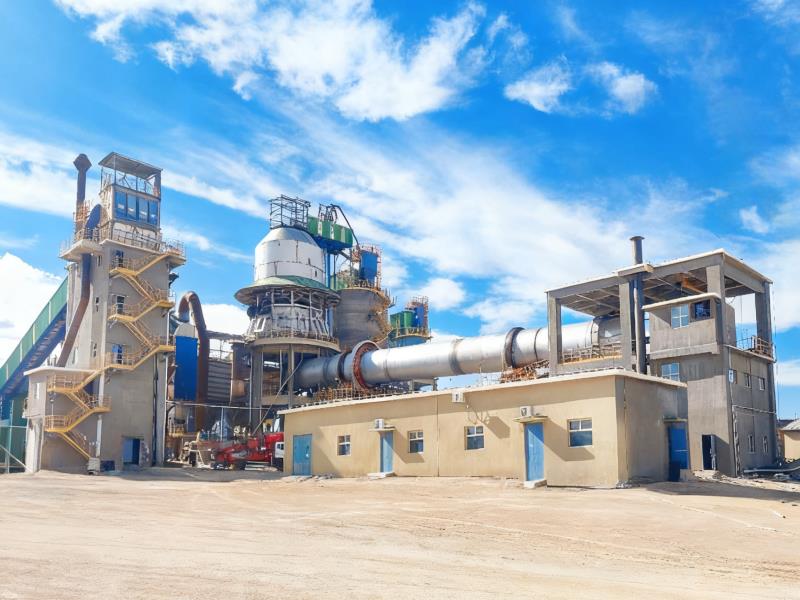
How a Lime Rotary Kiln Works
A lime rotary kiln performs calcination: it drives carbon dioxide out of calcium carbonate to leave calcium oxide. The reaction requires sustained high temperature and controlled residence time. The kiln itself is one part of a system; the surrounding equipment largely determines how stable and how efficient that reaction is.
Core components
Based on the material specification published for this kiln, the main construction elements are:
- Kiln shell — carbon steel or alloy steel, sized to the selected diameter and length.
- Refractory lining — refractory bricks or castable refractory, selected according to temperature and material characteristics.
- Riding rings and girth gear — cast steel or forged steel.
- Support rollers — forged or cast steel.
- Seals — heat-resistant and wear-resistant materials.
- Burner components — heat-resistant alloy steel and refractory materials.
Material selection can be customised according to temperature, material characteristics, and operating conditions, which means the same nominal kiln model can be built in more than one configuration.
The process sequence
- Feed preparation. Limestone is crushed to the kiln’s accepted feed size — 10–20 mm or 20–40 mm for this kiln.
- Preheating. In a preheater-equipped configuration, the feed is heated by kiln exhaust gases before entering the rotary shell, recovering heat that would otherwise be lost.
- Calcination. Inside the kiln, material is heated to approximately 1100±50°C and held long enough for the calcination reaction to complete.
- Cooling. Hot quicklime leaves the kiln and is cooled so that it can be handled and stored.
- Dust collection and conveying. Gas cleaning and material handling systems complete the line.
The company’s equipment portfolio for such a line includes rotary kilns, ball mills, vertical preheaters, single-drum coolers, vertical coolers, dryers, granulators, feeders, dust collectors, bucket elevators, crushers, magnetic separators, flotation machines, classifiers, and other auxiliary equipment. Vertical preheaters are specifically listed as matched equipment for the rotary kiln application.
Fuel flexibility and preheater integration
For the general rotary kiln model, the listed fuel options include pulverized coal, natural gas, industrial gases, diesel, heavy oil, biomass, and other suitable fuels. The lime kiln listing specifically notes multiple fuel options, vertical preheater integration, vertical cooler integration, and reduced heat loss. In practice, fuel choice is one of the first engineering decisions in a lime project, because it determines burner design, combustion air handling, and safe operating procedures.
Materials a Lime Rotary Kiln Can Process
The Lime Rotary Kiln listing specifies the following applicable materials: dolomite, magnesite, bauxite, cement clinker, kaolin, zinc oxide, LECA raw materials, lithium-bearing materials, solid waste, and other heat-treatable minerals and industrial materials.
That list is broader than limestone alone, and it reflects the fact that a rotary kiln is primarily a thermal-processing device. The same equipment family supports calcination, roasting, decomposition, drying, and sintering across several material categories. ZK MACHINE also supplies dedicated rotary kiln variants for adjacent applications:
- Zinc Oxide Rotary Kiln — classified as a Waelz Kiln and Zinc Oxide Production Kiln, model Ø2.5×40m to Ø4.5×72m, capacity approximately 2–20 t/h, processing zinc ash and electric arc furnace dust (EAF dust / EAFD).
- Magnesium Rotary Kiln — classified as a dolomite rotary kiln and dolomite calcination kiln, model Ø1.6×32m to Ø4.0×80m, capacity approximately 2–20 t/h, applicable material dolomite, serving magnesium ingot production.
- Cement Rotary Kiln — classified as a cement clinker rotary kiln, model Φ2.5×40 m to Φ4.3×60 m, capacity approximately 180–3200 t/d.
- Indirect-Fired Rotary Kiln — an externally heated rotary calciner with a maximum temperature of 1000°C and temperature control accuracy of ≤ ±2–5°C, built to order for dehydration, calcination, and decarburization processes.
- Acid Roasting Rotary Kiln — a lithium ore rotary kiln for spodumene and amblygonite, operating in the 200–350°C range, with a rotary kiln diameter of Φ1–Φ5.5 m.
The company also provides pilot rotary kilns and indirect-fired rotary kiln solutions for specialized applications, which are typically used before committing to full-scale capacity.
Use Cases Enabled by Lime Rotary Kilns
Lime rotary kilns are deployed where a continuous, controllable supply of quicklime or calcined material is required. The main use cases supported by this equipment are:
- Active lime production. The primary use case: continuous quicklime production for downstream lime consumers.
- Steelmaking and non-ferrous metallurgy. Lime is a flux and reagent in metal production, where quality consistency matters.
- Building materials and chemical industry. Lime is an input to construction products and chemical processes.
- Environmental applications. Calcined lime products are used in flue gas treatment and environmental processing.
- New energy materials. Lithium-bearing materials and related battery-material feedstocks pass through calcination and roasting steps.
- Mineral processing. Bauxite, kaolin, magnesite, dolomite, and zinc-bearing materials all use rotary kilns for one or more thermal steps.
Because the same kiln platform serves these different materials, the engineering work usually focuses on the interfaces — feed preparation, refractory selection, burner design, and downstream cooling — rather than on the kiln concept itself.
Lime Rotary Kiln vs. Other Rotary Kiln Types
The table below compares the rotary kiln variants published in the ZK MACHINE product range. It is intended to help buyers identify which kiln family matches a given material and capacity requirement. All figures are taken from the manufacturer’s own product specifications.
| Kiln type | Model range | Capacity | Primary material | Typical application industries |
|---|---|---|---|---|
| Lime Rotary Kiln | Φ2.5×40 m – Φ5.1×72 m | 150–1200 t/d | Limestone; also dolomite, magnesite, bauxite, kaolin, zinc oxide, LECA raw materials, lithium-bearing materials, solid waste | Active lime production, steelmaking, non-ferrous metallurgy, building materials, chemical industry, environmental applications |
| Cement Rotary Kiln | Φ2.5×40 m – Φ4.3×60 m | Approx. 180–3200 t/d | Cement raw meal, cement clinker | Cement plants, cement clinker production, building materials |
| Magnesium Rotary Kiln | Ø1.6×32m – Ø4.0×80m | Approx. 2–20 t/h | Dolomite | Magnesium ingot production |
| Zinc Oxide Rotary Kiln (Waelz Kiln) | Ø2.5×40m – Ø4.5×72m | Approx. 2–20 t/h | Zinc ash, electric arc furnace dust (EAFD) | Non-ferrous metallurgy, zinc processing, steelmaking, industrial waste recycling, chemical processing |
| Indirect-Fired Rotary Kiln | Customized | Customized | Lithium battery materials, activated carbon, zinc oxide, rare earth materials | New energy materials, powder materials, non-ferrous metals |
| Acid Roasting Rotary Kiln | φ0.8×10m – φ5.4×56m | Not specified | Spodumene, amblygonite | Lithium ore processing |
Note that the lime and cement kiln model ranges overlap at the smaller end. The difference is not the shell dimensions but the process design around the kiln: feed sizing, refractory choice, burner arrangement, and the cooling and product-handling stages.
How to Select a Lime Rotary Kiln
Selecting a lime rotary kiln is a specification exercise, not a catalogue lookup. The ZK MACHINE RFQ guidance lists the information a manufacturer needs before proposing a model: material name, required capacity, feed size, moisture content, target product, calcination temperature, fuel type, and specific heat-consumption requirements.
In a practical selection sequence, buyers typically work through the following steps:
- Define the target product. Active lime for steelmaking has a different quality expectation from lime used as a chemical reagent, which changes the required calcination control.
- Characterise the feed. Material name, feed size, moisture content, and impurity profile all affect kiln and refractory selection.
- Fix the capacity. The lime kiln range spans 150–1200 t/d, so capacity is one of the strongest constraints on the shortlist.
- Choose the fuel route. Available fuels determine the burner and combustion system, and therefore operating cost and emissions design.
- Decide on preheater and cooler configuration. Preheater integration and cooler integration influence heat recovery and total energy consumption.
- Confirm the auxiliary scope. Feeding, dust collection, conveying, and control systems may be supplied as part of a complete line or separately.
- Validate before scaling. Where the material is unusual or the process is new, a pilot-scale test campaign can reduce risk before full-scale equipment is built.
The ZK MACHINE product range includes pilot rotary kilns and indirect-fired rotary kiln solutions for specialized applications, and the company operates an in-house process testing workshop and testing & analysis centre that supports pilot testing and process data analysis.
Project Scope and Delivery Models
Rotary kiln projects are delivered in more than one commercial format. The application data published for this equipment family lists single-equipment supply, complete production lines, process EPC, and pilot-scale test units as the project types handled.
Manufacturing capability is one input into that scope decision. ZK MACHINE states that it can independently manufacture medium- and large-scale equipment and complete process systems, with more than 300 sets of manufacturing equipment in a facility that includes boring and milling machines, gear hobbing machines, vertical lathes, and heavy-duty cranes. It also states that it can independently undertake process engineering and equipment design of complete production systems.
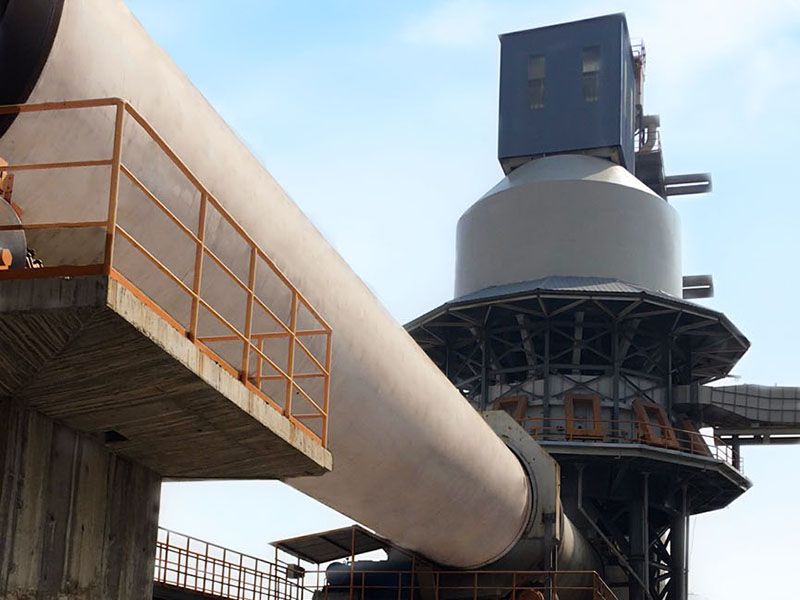
Standards and Compliance
Lime rotary kiln procurement frequently involves certification questions, particularly for projects in regulated markets. ZK MACHINE holds ISO 9001 Quality Management System Certification, ISO 14001 Environmental Management System Certification, ISO 45001 Occupational Health and Safety Management System Certification, Integration Management System Certification, and Environmental Protection Engineering Professional Contracting Qualification.
For projects requiring CE conformity, the applicable requirements can be determined based on the final equipment configuration and applicable EU legislation, and can be incorporated into the equipment design and documentation. Applicable CE-related documentation — including declarations of conformity, equipment manuals, and safety-related documentation — can be prepared according to the final equipment scope and project requirements.
The company also states that it has participated in the development and drafting of more than 10 industry standards and holds more than 150 core patents and over 20 software copyrights.
Frequently Asked Questions
Can Chinese lime rotary kiln manufacturers supply equipment that meets CE requirements?
For projects requiring CE conformity, the applicable requirements can be determined based on the final equipment configuration and applicable EU legislation, and can be incorporated into the equipment design and documentation. For European projects, the equipment and documentation can be configured according to applicable local regulations, technical specifications, and CE-related requirements. Applicable CE-related documentation — such as declarations of conformity, equipment manuals, and safety-related documentation — can be prepared according to the final equipment scope and project requirements.
What capacity range does a lime rotary kiln cover?
The Lime Rotary Kiln published by ZK MACHINE covers a capacity of 150–1200 t/d, with a specification range of Φ1.6×32–Φ4.7×72 m and a model range of Φ2.5×40 m to Φ5.1×72 m. The listed calcination temperature is 1100±50°C and the accepted limestone feed size is 10–20 mm or 20–40 mm. Actual output for a specific project depends on the material, feed preparation, and process configuration.
How can a lime rotary kiln project be tested before full-scale investment?
ZK MACHINE provides pilot rotary kilns and indirect-fired rotary kiln solutions for specialized applications, and operates its own process testing workshop and testing & analysis centre supporting pilot testing and process data analysis for building materials, metallurgical materials, and related applications. Pilot-scale test units are listed as one of the project types the company handles, alongside single-equipment supply, complete production lines, and process EPC.
What information should be included in a lime rotary kiln inquiry?
A useful RFQ includes the material name, required capacity, feed size, moisture content, target product, calcination temperature, fuel type, and specific heat-consumption requirements. ZK MACHINE can design and customize rotary kilns and complete process systems according to material properties, production capacity, and thermal-processing requirements. Inquiries can be sent to vip@zkcorp.com, and the company’s complete product catalogue is available for download below.
What fuel options are available for a lime rotary kiln?
The general rotary kiln specification lists pulverized coal, natural gas, industrial gases, diesel, heavy oil, biomass, and other suitable fuels. The lime kiln listing notes multiple fuel options as one of its design characteristics. The burner and combustion system should be matched to the selected fuel, so fuel choice is normally settled early in the project specification.
Conclusion
A lime rotary kiln is the central thermal-processing unit in a quicklime production line. The equipment itself is built around a refractory-lined rotating shell, but the commercial and technical performance of a project depends on how the kiln is configured — feed preparation, preheating, combustion, cooling, dust collection, and control.
For buyers at the research stage, the practical starting points are the material, the required capacity, the fuel route, and the target product specification. ZK MACHINE’s published lime rotary kiln covers a capacity of 150–1200 t/d at a calcination temperature of 1100±50°C, and the wider rotary kiln range extends to cement, magnesium, dolomite, zinc oxide, bauxite, kaolin, lithium-bearing materials, and LECA applications. Buyers who can supply a complete material and capacity brief will get a faster, more accurate response than those requesting a generic quotation.
Next Step
To discuss a lime rotary kiln project, request a technical proposal, or review the full product range, download the catalogue below or contact the manufacturer directly.
Product catalogue (PDF): ZK MACHINE Product Catalogue
Email: vip@zkcorp.com | Website: www.zkcomp.com
Have Questions or Need More Details?
Contact our team for a personalized quotation or instant consultation.
Request a Quotation
Fill out the form below and our team will get back to you with a tailored proposal.
WhatsApp Direct Chat
Prefer to chat in real-time? Message us on WhatsApp for instant assistance & quick answers.
- Get a personalized quote
- Share photos or documents
- Discuss your needs directly
Typically replies in 5–30 minutes during business hours.