
Cement Clinker Quality Problems: How Controlled Residence Time in a Rotary Kiln Solves Them
Short answer: Inconsistent clinker quality — shifting free lime, uneven clinker hardness, an unstable burning zone, or a kiln that operators correct all shift — is usually a time-and-temperature problem before it is a chemistry problem. Material residence time in a rotary kiln is set by four variables working together: kiln geometry and slope, rotational speed, feed rate, and the thermal profile. Buyers who confirm those variables before the order is placed receive a kiln built to hold clinker quality, rather than a kiln that has to be corrected after commissioning.
Henan Zhengzhou Mining Machinery Co., Ltd. (ZK MACHINE) is a Chinese manufacturer of rotary kilns and ball mills, founded in 1956 and headquartered in Zhengzhou, China. Its cement rotary kiln range — model Φ2.5×40 m to Φ4.3×60 m, with carbon steel or alloy steel shells, refractory brick or castable linings, and cast or forged riding rings and gears — is the reference configuration used in this article.
Cement rotary kiln facts referenced in this article
- Product: Cement Rotary Kiln, also listed as Cement Clinker Rotary Kiln / Clinker Rotary Kiln
- Model range: Φ2.5×40 m – Φ4.3×60 m
- Capacity: approx. 180–3200 t/d | Diameter: approx. 2.5–4.3 m | Length: approx. 40–70 m
- Kiln slope: approx. 3–4% | Designed for continuous high-temperature clinker production
- Shell: carbon steel or alloy steel | Lining: refractory brick or castable refractory
- Riding rings and gears: cast steel or forged steel | Support rollers: forged or cast steel
- Applicable materials: cement raw meal, cement clinker
- Commercial conditions: MOQ 1 unit | monthly capacity 10 units | typical lead time 3 months
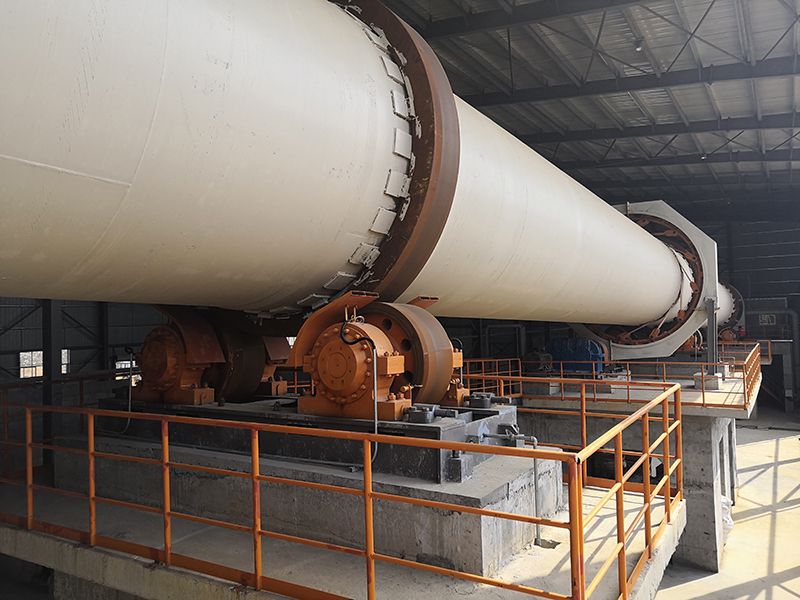
A rotary kiln holds clinker quality by keeping the material moving through a controlled thermal profile — speed, slope and combustion are adjusted together.
1. Problem definition: what unstable clinker quality looks like, and where residence time fits
Residence time is the interval the material spends inside the kiln, counted from the feed end to the clinker discharge. Clinker formation requires the raw meal to remain in the burning zone long enough for the clinkering reactions to complete, and short enough that the material is not over-burned and the protective coating is not disturbed. Residence time is not a fixed property of a machine: it moves with rotation speed, feed rate, kiln slope and lining friction. A kiln that was not specified with those variables in mind drifts, and the drift shows up in the clinker.
On a cement line, the symptoms are recognisable:
- Free lime that swings outside the target band. The downstream cement strength becomes harder to hold, and quality control moves from monitoring to firefighting.
- Clinker that alternates between under-burned and over-burned. Both extremes change grindability, which changes mill output and specific power consumption.
- Burning zone temperature excursions. Coating becomes unstable, refractory wear accelerates, and unplanned stops become more frequent.
- Corrections that arrive too late. Operators adjust kiln speed or fuel after a deviation is detected, but the material that caused the deviation has already left the kiln.
In practice, residence time drift comes from four sources. First, kiln speed and feed rate that are not matched — material either passes through the burning zone faster than the reactions require, or lingers and consumes extra fuel. Second, thermal profile drift, where fuel supply, combustion air and burner condition move the temperature profile independently of the material flow. Third, mechanical drift — riding rings, support rollers, gear alignment, shell deformation and seal leakage. A kiln that is not mechanically stable cannot hold a repeatable speed and a repeatable profile. Fourth, control drift, where too few temperature monitoring points, or a control system that is not coordinated with kiln speed and fuel supply, leaves residence time effectively unmanaged.
One boundary worth stating clearly: residence time is not the only variable in clinker quality. Raw mix chemistry, raw meal fineness, preheater performance and cooler efficiency all matter and must be engineered separately. What a residence-time review does is lock in the part of the process that the equipment purchase actually determines.
2. Industry background: why kiln stability has become a cost question
Cement kilns are the largest segment of the rotary kiln market. According to Dataintelo's Rotary Kiln Market Research Report, cement kilns accounted for approximately 62% of the rotary kiln market in 2025, followed by metallurgy at 24% and lime at 14%.
Market size estimates differ sharply by scope, and buyers should read them carefully. One commercial research source values the global rotary kiln market at USD 3.8 billion in 2025, projected to reach USD 6.1 billion by 2034. A second source reports USD 662.79 million in 2024 rising to USD 906.42 million by 2034, at a reported CAGR of 3.18% from 2025 onward. The gap reflects different market boundaries — full production-line value versus stand-alone kiln hardware — rather than a disagreement about demand. Both are commercial research estimates and are best used for direction, not for budgeting.
The operating context matters more than the headline number. China's total cement clinker production capacity was approximately 2.1 billion tons as of 2024, with an average kiln utilization rate of approximately 57%, according to the World Cement Association. Where capacity is already installed and utilization sits below full, competition moves to conversion cost: specific fuel consumption, refractory life, and the ability to hold clinker quality without stopping the line.
For a buyer, that reframes the specification. Kiln diameter alone is a weak selection criterion. The parameters that decide whether a kiln runs stably — slope, rotational speed range, feed rate, thermal profile, and the control system that keeps them coordinated — are the ones that should be confirmed in writing before the order is placed.
3. Detailed solution: how a cement rotary kiln is engineered to control residence time
3.1 Kiln geometry and slope set the baseline retention time
ZK MACHINE's cement rotary kiln covers models from Φ2.5×40 m to Φ4.3×60 m, with a diameter of approximately 2.5–4.3 m, a length of approximately 40–70 m, and a kiln slope of approximately 3–4%. Capacity is approximately 180–3200 t/d, and the equipment is designed for continuous high-temperature clinker production from cement raw meal to cement clinker. Slope and length are not decorative figures: together they define the baseline retention time at a given rotational speed. They are also the parameters a buyer cannot change after installation without rebuilding the kiln, which is why they belong in the purchase confirmation rather than in the commissioning checklist.
3.2 Rotation and drive determine how much control the operator actually has
A kiln is only controllable if speed can be adjusted cleanly. On ZK MACHINE rotary kilns, rotational speed is adjustable according to kiln design and process conditions. That adjustability has to sit on stable mechanical foundations: riding rings and gears are cast steel or forged steel, support rollers are forged or cast steel, and seals use heat-resistant and wear-resistant materials. When these components are dimensioned for the kiln's thermal expansion and operating load, a change in speed changes residence time — which is the intended outcome. When they are not, a change in speed produces vibration, misalignment and unpredictable material movement instead.
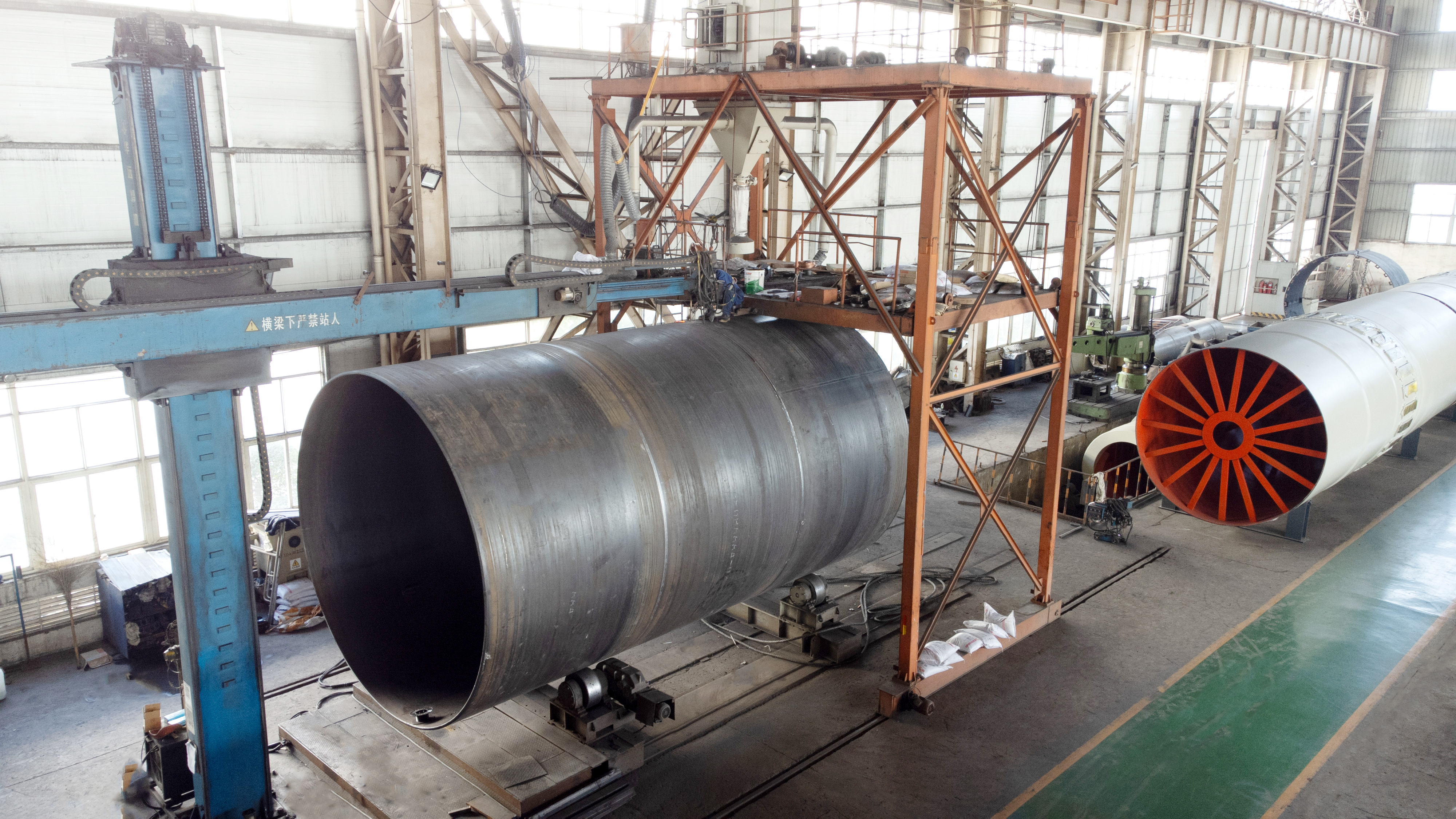
Kiln shell fabrication: shell straightness and weld quality support stable rotation, which is what makes speed a usable control variable for residence time.
3.3 The thermal profile is what converts time into clinker
Residence time only produces clinker if the material is at the right temperature while it is inside the kiln. ZK MACHINE rotary kilns can fire pulverized coal, natural gas, industrial gases, diesel, heavy oil, biomass and other suitable fuels, and both direct-fired and selected indirect-fired configurations are available. Burner components use heat-resistant alloy steel and refractory materials, and the burner and combustion system are matched to the selected fuel. Temperature is controlled through coordinated adjustment of fuel supply, combustion air, kiln speed, material residence time and temperature monitoring points — not by any single variable in isolation.
3.4 Shell, refractory lining and seals hold the profile over time
The kiln shell is manufactured from carbon steel or alloy steel, and the refractory lining is either refractory brick or castable refractory. Material selection is customized according to temperature, material characteristics and operating conditions. This matters for residence time indirectly but decisively: lining wear changes the internal cross-section and surface friction, while air infiltration through worn seals changes the thermal profile. A kiln whose shell, lining and seals were specified for the actual operating temperature and material chemistry holds a stable profile between maintenance stops. One that was not, does not — and the difference appears as clinker quality variation long before it appears as a mechanical failure.
3.5 Control and auxiliary systems turn a kiln into a process line
Residence time is held by a system, not by a single machine. A rotary kiln system may include feeding equipment, burners, preheaters, coolers, dust collectors, conveying equipment and automated control systems. ZK MACHINE states that stable long-term operation is supported by optimized thermal design, kiln structure, refractory selection, drive systems and automated process control. Beyond individual machines, the company integrates core equipment with crushing, screening, feeding, mixing, granulation, preheating, drying, cooling, conveying and dust collection into complete, customized process solutions based on material characteristics, production capacity and process requirements.
3.6 Manufacturing and verification behind the specification
ZK MACHINE was founded in 1956 and operates from a site covering more than 80,000 m² in Zhengzhou, with more than 60,000 m² of workshop space, eight modern workshops, five heavy-duty workshops and more than 300 sets of manufacturing equipment. Quality control is 100% test. The company has participated in the development and drafting of more than 10 industry standards and holds more than 150 core patents and over 20 software copyrights, and it holds ISO 9001, ISO 14001 and ISO 45001 certifications.
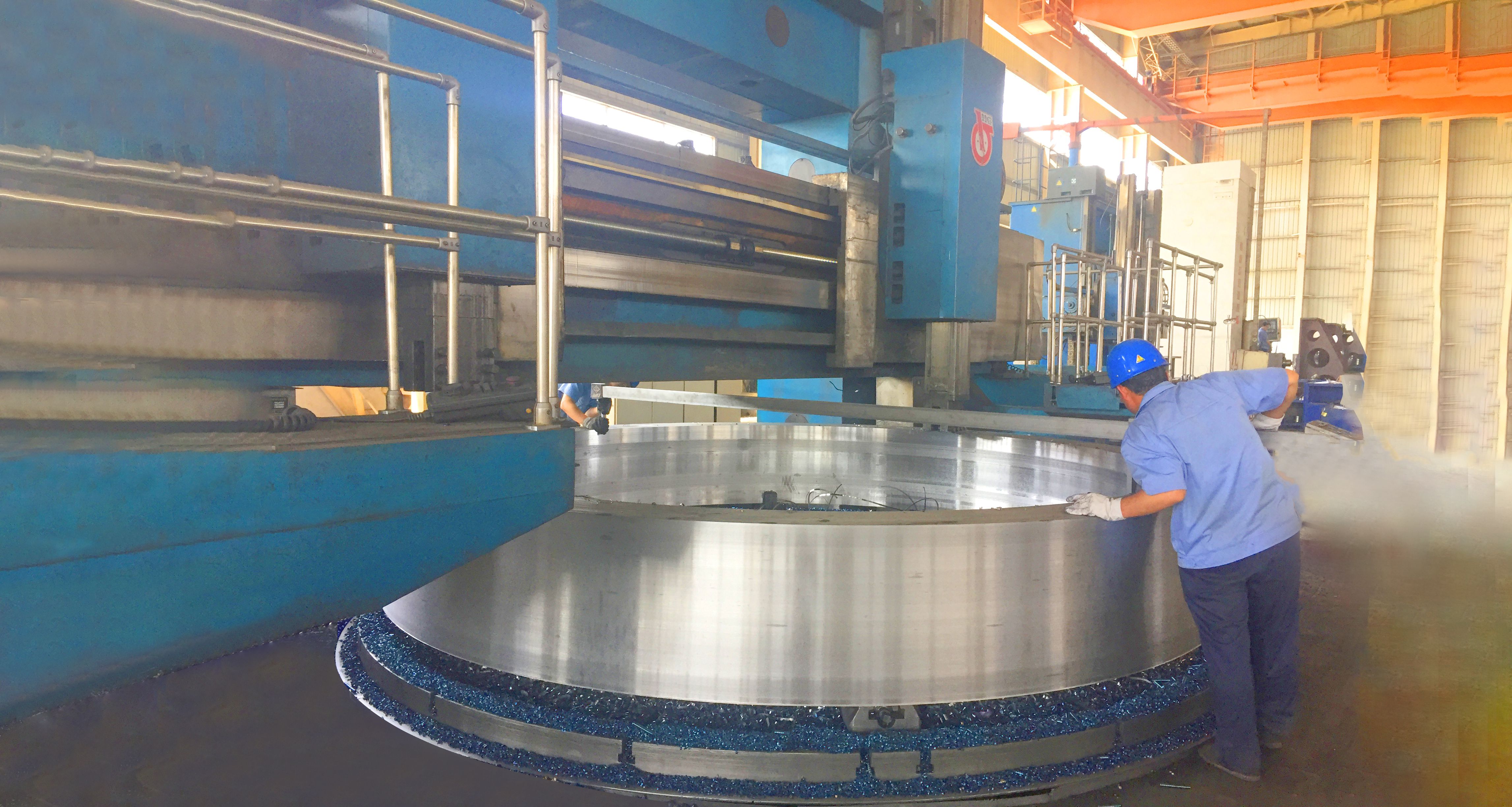
Large-component machining: kiln rings, rollers and gear assemblies are machined to the tolerances that keep a kiln rotating on axis at the specified speed.
4. Step-by-step breakdown: what to confirm before ordering a cement rotary kiln
The following sequence follows the way a rotary kiln project is actually specified. Each step produces a documentable answer, and skipping a step usually reappears later as a clinker quality problem.
Step 1 — Define the material and the product, not the machine. Start with the raw meal characteristics and the target clinker. The selection parameters are processing capacity, material characteristics, feed size, moisture, calcination temperature, fuel type, heating method, atmosphere, residence time and product quality.
Step 2 — Fix capacity and convert it into kiln geometry. State the required throughput in t/d and match it against the model range Φ2.5×40 m to Φ4.3×60 m and the capacity range of approximately 180–3200 t/d. Then confirm diameter, length and slope (approximately 3–4%), because those three values set the baseline residence time.
Step 3 — Agree the rotational speed range and drive configuration. Ask for the adjustable speed range in writing, and confirm the drive together with the riding rings and gears (cast steel or forged steel) and support rollers (forged or cast steel). This is the step that determines whether residence time can be tuned in operation.
Step 4 — Confirm the fuel and the burner. Pulverized coal, natural gas, industrial gases, diesel, heavy oil, biomass and other suitable fuels can be used depending on project conditions, and the burner and combustion system must be matched to the selected fuel. A burner that does not match the fuel undermines the thermal profile regardless of how well the kiln geometry was chosen.
Step 5 — Confirm shell, lining and seal materials against real operating conditions. The shell should be specified as carbon steel or alloy steel, the lining as refractory brick or castable refractory, and seals as heat-resistant and wear-resistant materials. Material selection is customized according to temperature, material characteristics and operating conditions.
Step 6 — Confirm the control philosophy and instrumentation. Ask how many temperature monitoring points the system includes and how fuel supply, combustion air and kiln speed are coordinated with them. This is the difference between a kiln that reports a deviation and a kiln that prevents one.
Step 7 — Confirm auxiliary equipment and the system boundary. Clarify whether the scope is single-equipment supply, a complete production line, process EPC, or a pilot-scale test unit, and list the supporting equipment: feeding, preheating, cooling, dust collection, conveying and automation.
Step 8 — Confirm supplier-side conditions in the same document. Supplier qualification, equipment configuration, delivery lead time, installation and commissioning, warranty and performance acceptance criteria decide whether the residence-time design survives commissioning. Request documentation in the same round: a CE certificate for Rotary Kiln (certificate number M.2024.206.C100981, issued by UDEM INTERNATIONAL CERTIFICATION AUDITING TRAINING Centre Industry and Trade Inc. Co., covering Machinery and Electromagnetic Compatibility for the EU market, valid from 2024-05-16 to 2029-05-16), management system certificates, and factory test records.
Table 1 — Purchase confirmation matrix
| Item to confirm | Why it affects clinker stability |
|---|---|
| Processing capacity (t/d) | Sets the feed rate the kiln must be able to match at a stable speed |
| Feed size and moisture | Influence drying and heating load ahead of the burning zone |
| Calcination temperature | Defines the thermal profile the residence time must be matched to |
| Residence time | The parameter that converts geometry, slope, speed and feed rate into clinker quality |
| Fuel type and heating method | Determine flame shape, combustion stability and profile repeatability |
| Atmosphere | Affects oxidation state and, for some materials, product chemistry |
| Product quality requirement | Defines the acceptance criteria for the performance test |
| Supplier qualification, configuration, lead time, installation and commissioning, warranty, performance acceptance | Determine whether the specified design is delivered and proven on site |
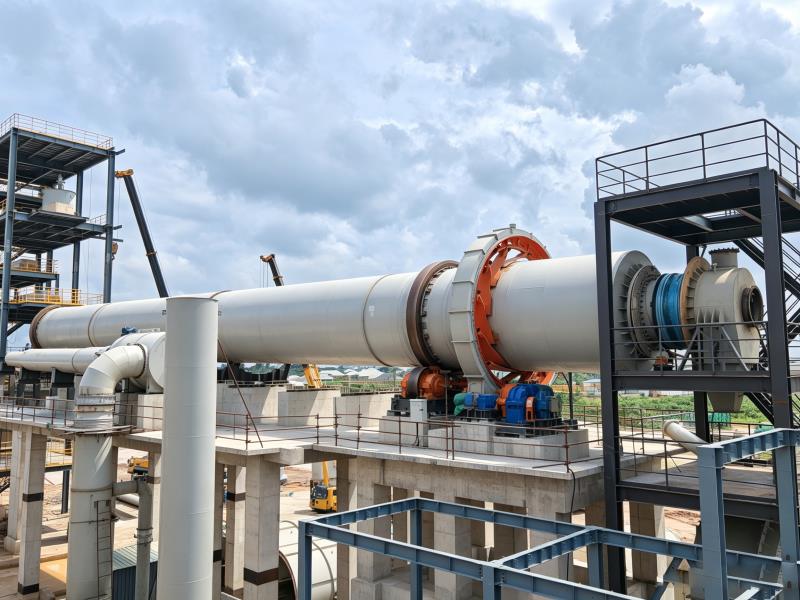
Commissioning is where the specified residence time either becomes a working control loop or an unresolved problem.
5. Use cases: three situations where residence time control decides the outcome
Case 1 — A new clinker line sized at the top of the model range
A cement plant specifying a kiln at the upper end of the Φ2.5×40 m to Φ4.3×60 m range, with capacity up to approximately 3200 t/d, is buying retention time as much as it is buying tonnage. At this scale the slope (approximately 3–4%), the adjustable speed range and the drive train must be agreed together, because a large kiln has less tolerance for speed correction than a small one.
Case 2 — Replacing a kiln whose clinker quality fluctuates
When free lime swings and the burning zone is corrected continuously, the purchase question is not only which kiln to buy but which parameters were never fixed the first time. The confirmation list in Section 4 is designed to be applied to the replacement specification, with attention to shell and lining material selection, seal condition, and the number of temperature monitoring points.
Case 3 — Projects that also include downstream cement handling
Kiln performance and downstream grinding are linked through clinker grindability, so some buyers scope both in one project. ZK MACHINE has delivered a 70 t/h cement grinding station project in Yemen for a cement producer, using pre-crushing with a single-stage box-type hammer crusher, a Φ4.2 m ball mill, a closed circuit with an O-Sepa high-efficiency classifier (product fineness adjustable within 280–650 m²/kg), two steel silos for cement storage, vibrating screens underneath, and multi-point dust collection. This project is a grinding station rather than a kiln line, but it illustrates how the company's cement-sector scope is assembled around core process units.
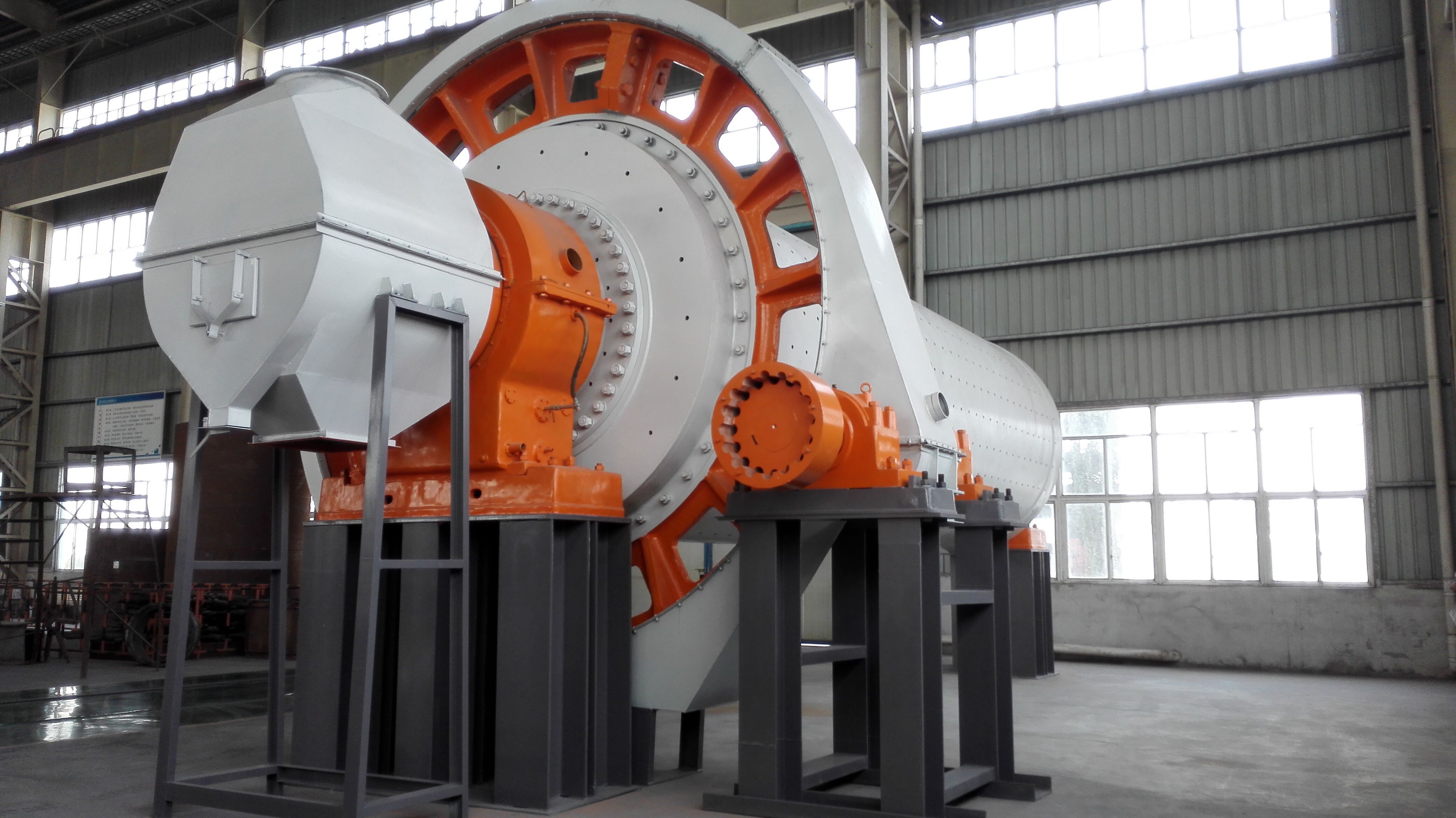
A 70 t/h cement grinding station project in Yemen — downstream of clinker production, but part of the same quality chain.
Related configurations with the same control logic
The same residence-time logic applies to other kiln applications that buyers frequently specify alongside cement. A ZK MACHINE lime rotary kiln covers models from Φ2.5×40 m to Φ5.1×72 m, with a capacity of 150–1200 t/d, a calcination temperature of 1100±50°C and limestone feed sizes of 10–20 mm or 20–40 mm. Magnesium rotary kilns and zinc oxide rotary kilns operate at a kiln slope of approximately 3.5–4%. For buyers specifying more than one kiln type, requesting the same parameter set for each is the simplest way to keep the specifications comparable.
6. Comparison table: ZK MACHINE rotary kiln configurations
| Configuration | Model range | Capacity | Kiln slope | Typical materials |
|---|---|---|---|---|
| Cement Rotary Kiln Cement Clinker Rotary Kiln / Clinker Rotary Kiln | Φ2.5×40 m – Φ4.3×60 m | approx. 180–3200 t/d | approx. 3–4% | Cement raw meal, cement clinker |
| Rotary Kiln Energy Saving / Bauxite Rotary Kiln | Φ1.6×32 m – Φ4.7×72 m | 48–1000 t/d | — | Dolomite, magnesite, bauxite, cement clinker, kaolin, zinc oxide, LECA raw materials, lithium-bearing materials, solid waste |
| Lime Rotary Kiln | Φ2.5×40 m – Φ5.1×72 m | 150–1200 t/d | — | Limestone for active lime (calcination 1100±50°C; feed 10–20 mm / 20–40 mm) |
| Magnesium Rotary Kiln Dolomite Rotary Kiln | Ø1.6×32 m – Ø4.0×80 m | approx. 2–20 t/h | approx. 3.5–4% | Dolomite |
| Zinc Oxide Rotary Kiln Waelz Kiln | Ø2.5×40 m – Ø4.5×72 m | approx. 2–20 t/h | approx. 3.5–4% | Zinc ash, electric arc furnace dust (EAF dust / EAFD) |
All configurations share the same material logic for the kiln shell (carbon steel or alloy steel), the refractory lining (refractory bricks or castable refractory), the riding rings and gears (cast steel or forged steel), and the seals (heat-resistant and wear-resistant materials), with selection customized according to temperature, material characteristics and operating conditions.
7. Limits and boundaries: what controlled residence time cannot fix
A specification is only useful if its limits are stated as clearly as its benefits. Residence time control on a cement rotary kiln will not:
- Correct a raw mix or raw meal fineness problem. If the feed chemistry or fineness is inconsistent, the kiln is being asked to compensate for an upstream issue that no kiln geometry can absorb.
- Replace preheater or cooler performance. Preheating and cooling affect the thermal load the kiln must handle, and heat consumption can also be reduced through preheating, optimized combustion, reduced heat loss from the kiln shell, waste heat recovery and efficient product cooling.
- Guarantee a single fixed number for retention time. Operating temperature depends on the material and process and can range from several hundred degrees Celsius to above 1,000°C, and retention behaviour varies with feed properties.
- Eliminate maintenance. Maintenance intervals depend on operating hours, material abrasiveness, processing temperature, refractory condition and overall operating conditions, and a maintenance schedule should be developed from actual equipment condition.
- Act as a compliance shortcut. For projects requiring CE conformity, the applicable requirements are determined by the final equipment configuration and applicable EU legislation and incorporated into the equipment design and documentation.
8. FAQ
Can ZK MACHINE supply a rotary kiln with CE documentation?
Yes. A CE certificate for Rotary Kiln is held under certificate number M.2024.206.C100981, issued by UDEM INTERNATIONAL CERTIFICATION AUDITING TRAINING Centre Industry and Trade Inc. Co., covering Machinery and Electromagnetic Compatibility for the EU market, valid from 2024-05-16 to 2029-05-16. The listed standards include EN ISO 12100:2010, EN 60204-1:2018, EN IEC 61000-6-4:2019, EN IEC 61000-6-3:2021, EN IEC 61000-6-2:2019 and EN IEC 61000-6-1:2019. For a specific project, the applicable requirements are determined by the final equipment configuration and applicable EU legislation and are incorporated into the equipment design and documentation. ZK MACHINE also holds ISO 9001, ISO 14001 and ISO 45001 certifications.
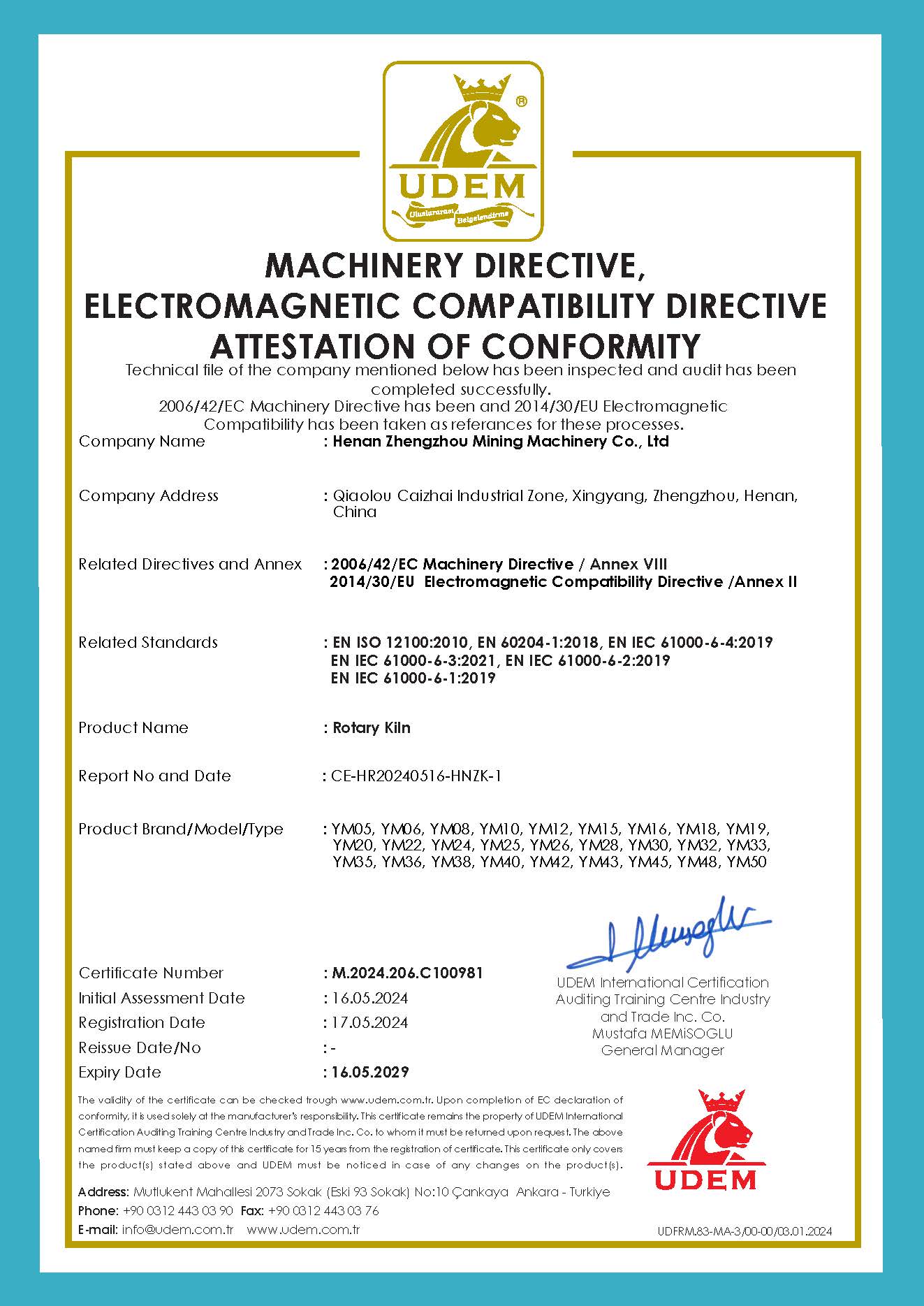
CE certificate for Rotary Kiln, M.2024.206.C100981, covering Machinery and Electromagnetic Compatibility for the EU market.
Is ZK MACHINE a Chinese rotary kiln OEM manufacturer, and how does it support stable kiln operation?
Henan Zhengzhou Mining Machinery Co., Ltd. (ZK MACHINE) is a Chinese manufacturer founded in 1956 in Zhengzhou, producing rotary kilns and ball mills under the OBM (original brand manufacturing) production mode. Its listed product portfolio includes rotary kiln, active lime rotary kiln, cement rotary kiln and lime rotary kiln, and the company states that its products and process systems have been supplied to customers in more than 130 countries and regions. Stable long-term operation is supported by optimized thermal design, kiln structure, refractory selection, drive systems and automated process control, with 100% testing at the factory.
What parameters must be confirmed before a rotary kiln quotation is meaningful?
Confirm processing capacity, material characteristics, feed size, moisture, calcination temperature, fuel type, heating method, atmosphere, residence time and product quality. Alongside these, confirm supplier qualification, equipment configuration, delivery lead time, installation and commissioning, warranty and performance acceptance criteria. For commercial planning, the minimum order quantity is 1 unit, monthly production capacity is 10 units, and typical production lead time is 3 months.
Can residence time and kiln design be validated before full-scale investment?
ZK MACHINE operates its own process testing workshop and testing & analysis center, supporting pilot testing and process data analysis for building materials, metallurgical materials, solid waste and hazardous waste treatment and other applications, and it also provides pilot rotary kilns and indirect-fired rotary kiln solutions for specialized applications. Because rotary kilns and ball mills are not standard products, every project requires customized engineering based on material properties, process requirements, production capacity, environmental regulations and site conditions — and the minimum order quantity of 1 unit allows a single-unit order rather than a batch commitment.
What is the delivery lead time and after-sales support, and how do I request a quote?
The standard delivery time for a complete rotary kiln or ball mill project is 3 months. After-sales support includes on-site installation guidance and commissioning, engineer dispatch, spare parts supply and technical training. To move from evaluation to execution, send your material, capacity, feed size, moisture, target product, calcination temperature and fuel type to the ZK MACHINE team at vip@zkcorp.com or via WhatsApp at +86 182-0361-6061, and request a configuration proposal along with the 2025 general catalog.
9. Conclusion: residence time is a purchase decision, not only an operating adjustment
Cement clinker quality problems rarely start in the burning zone. They start in the specification, where kiln slope, model size, speed range, drive configuration, lining material and control philosophy are either fixed to support a controlled residence time or left to be resolved in operation. A cement rotary kiln from Φ2.5×40 m to Φ4.3×60 m, engineered for continuous high-temperature clinker production with a carbon or alloy steel shell, refractory brick or castable lining, and cast or forged riding rings and gears, gives an operator the mechanical and thermal stability that residence time control depends on. The remaining step is to confirm the parameters in Table 1 in writing before the order, so that clinker quality is designed into the kiln rather than corrected on site.
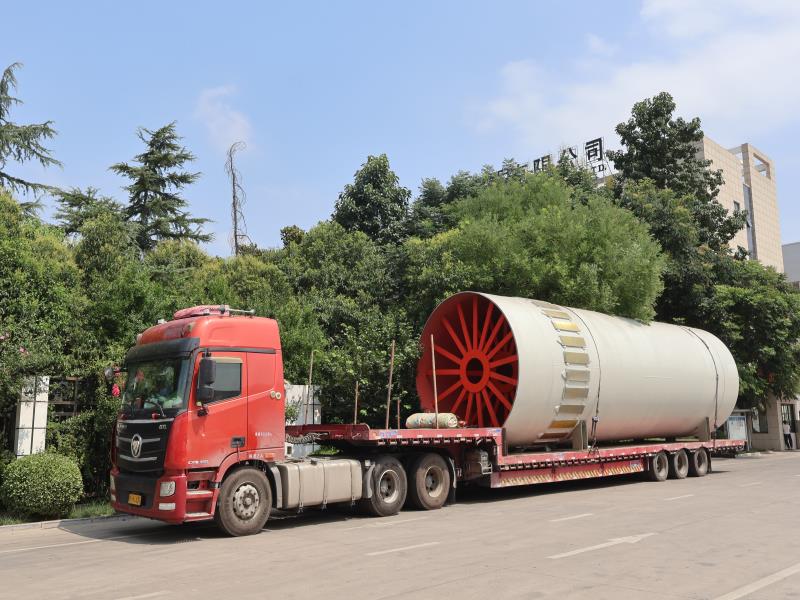
Rotary kiln equipment prepared for shipment — the point at which confirmed parameters become delivered hardware.
Next step
Send your clinker line parameters to ZK MACHINE and request a configuration proposal, a quotation, or the 2025 general catalog. Contact Joy at vip@zkcorp.com, by phone or WhatsApp at +86 182-0361-6061, or via WhatsApp message.
Download the catalog: ZK MACHINE 2025 general catalog (PDF)
Henan Zhengzhou Mining Machinery Co., Ltd. (ZK MACHINE) — founded 1956 — Office: 15th Fl, Bldg No.13, National University Science Park (East), No.279, West 3rd Ring Rd, Zhengzhou, China. Factory: Qiaolou Caizhai Industrial Estate, Xingyang, Zhengzhou, China. Website: www.zkcomp.com
Have Questions or Need More Details?
Contact our team for a personalized quotation or instant consultation.
Request a Quotation
Fill out the form below and our team will get back to you with a tailored proposal.
WhatsApp Direct Chat
Prefer to chat in real-time? Message us on WhatsApp for instant assistance & quick answers.
- Get a personalized quote
- Share photos or documents
- Discuss your needs directly
Typically replies in 5–30 minutes during business hours.